Research library
KPV, explained
12 guides, organized by the question you are trying to answer.
Research Guides
KPV colitis research: what mice can and cannot answer for an IBD patient
A study-design guide for people evaluating KPV claims alongside established inflammatory bowel disease care.
KPV cytokine claims: from a pathway diagram to a patient question
Read NF-kappaB, IL-8 and other laboratory signals without treating them as established symptom relief.
A GI symptom record for a KPV consultation
Bring observations that help clinical assessment without using a diary or a peptide page to diagnose yourself.
Why oral KPV access does not establish an injectable pathway
Check the exact route in a policy document before accepting a claim that every KPV preparation is covered.
KPV acetate and a COA: connect the document to the supplied material
Read identity and lot information without treating a purity number as proof of clinical effectiveness.
Keep a dated KPV access record: meetings, policy and product details
Read regulatory developments in sequence without treating an advisory discussion as approval of a finished medicine.
KPV, GKPV and alpha-MSH: related names, different evidence
Learn how to identify the actual peptide in a paper before applying its findings to a KPV product.
KPV versus BPC-157 for gut questions: define the comparison first
Build a comparison around diagnosis, route and relevant evidence rather than selecting a peptide from a broad gut-health label.
Oral KPV: why the delivery system belongs in the evidence
A practical guide to nanoparticles, hydrogel studies and formulation-specific human bioavailability questions.
“Registered trial” is not a KPV result: read the record
Learn which fields distinguish a planned investigation, its recruitment status and any available findings.
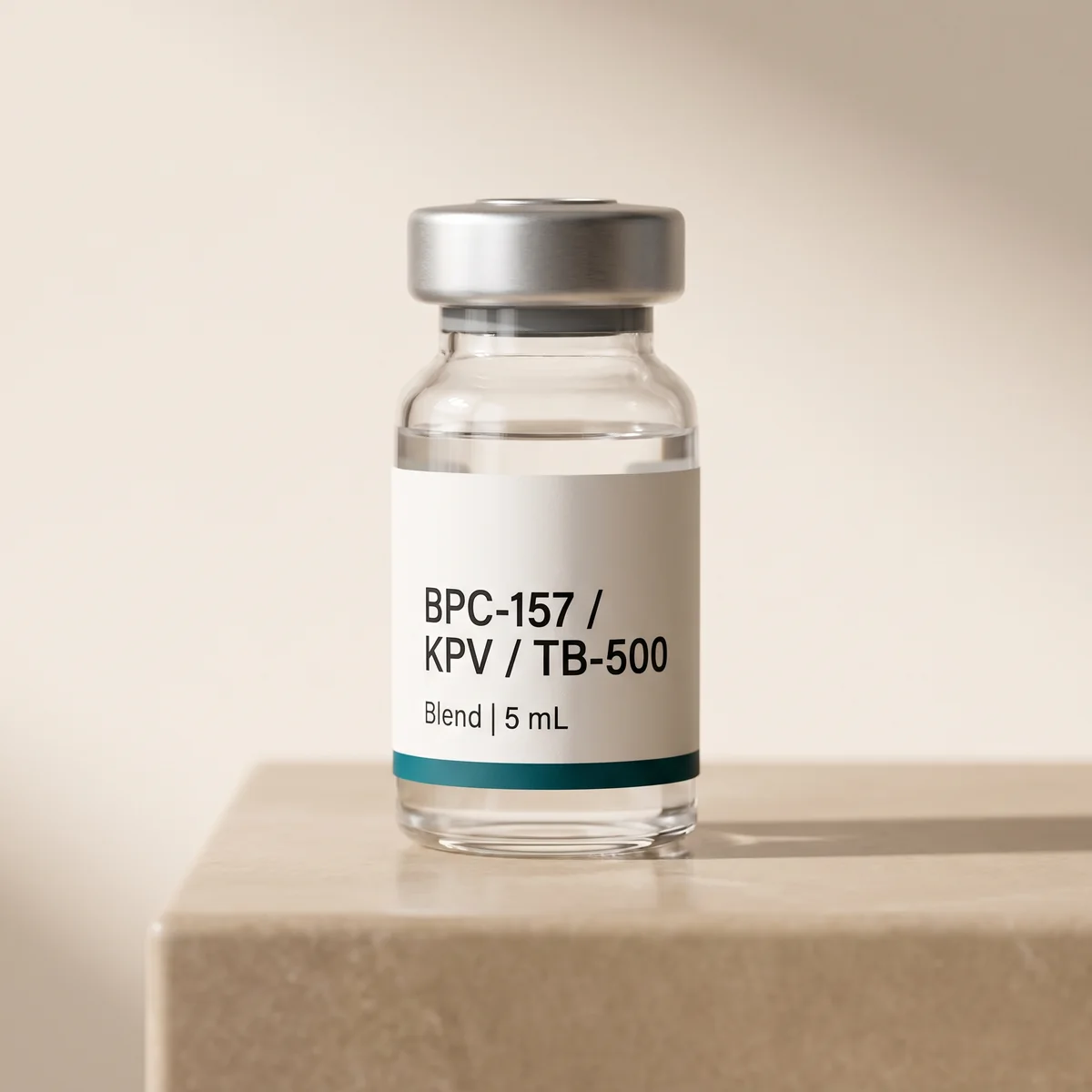
KPV combinations and access: read the ingredient list and the dated policy
Distinguish experimental combinations from single-ingredient products and check the route-specific conditions of current access policy.
Topical KPV: separate skin-cell findings from delivery and patient outcomes
Understand what keratinocyte and skin-permeation experiments establish before applying them to a cream or a skin condition.